
Identity Theft After a Disaster: Spot It Early, Shut It Down Fast
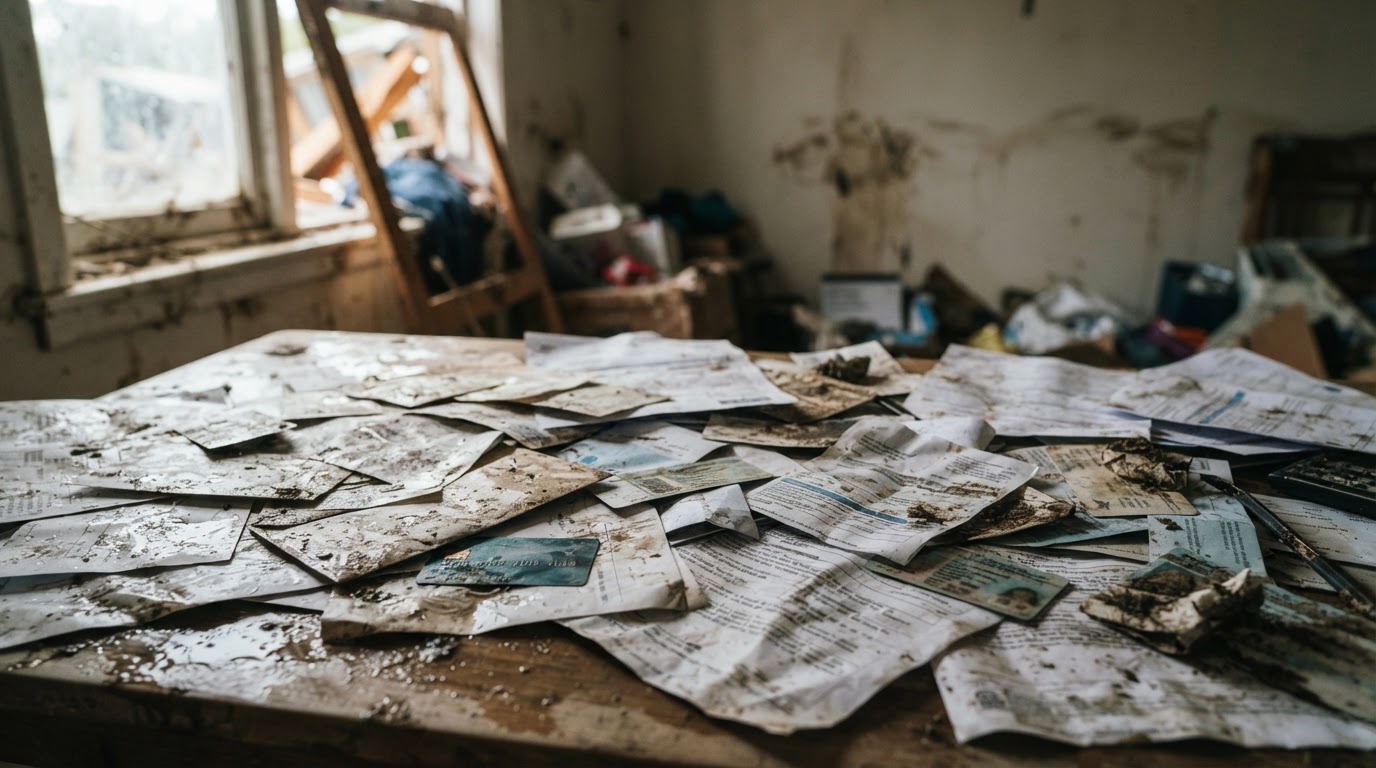
Floods and fires scatter the paperwork identity thieves need. The warning signs FEMA lists, the free FTC recovery plan, and how to lock down new accounts.
This article contains affiliate links. If you buy through these links, we may earn a small commission at no extra cost to you.
After a fire, flood, or evacuation, your personal information passes through more hands than usual: shelter sign-ins, contractor quotes, aid tables, a mailbox you cannot reach. FEMA warns criminals file fake aid applications with stolen survivor identities. Freeze your credit at all three bureaus (free, per the FTC), file at IdentityTheft.gov for a free personal recovery plan, and treat uninvited FEMA contact as fraud until verified.
Quick answer: Disaster paperwork is an identity thief's best week. Lock it down in this order: freeze credit at Equifax, Experian, and TransUnion (free), report at IdentityTheft.gov (free recovery plan), add a fraud alert (free, renewable yearly), and verify anything FEMA-shaped at 800-621-3362. FEMA never charges for help; anyone asking for money in its name is a scammer.
Why disasters are prime time for identity theft
Three things change at once. Mail piles up where you no longer sleep. You hand your Social Security number to a string of strangers: shelter staff, cleanup crews, contractors, aid volunteers. And official-looking help shows up uninvited, which is exactly the cover a scammer wants.
FEMA's disaster fraud page says it outright: after a disaster, scam artists and identity thieves try to take advantage of survivors, including by applying for FEMA assistance with names, addresses, and Social Security numbers stolen from those same survivors. The FTC issued the same warning about FEMA impersonators specifically: they show up, call, or text after a weather emergency offering grants or inspections for a fee, usually cash up front. FEMA does not charge for anything, so the fee is the tell.
Five signs someone is using your identity
Check for these in the first weeks, while the paperwork chaos still gives fraud cover:
- A FEMA letter arrives and you never applied. FEMA says to call its Helpline at 800-621-3362. The fraudulent file gets locked so it stands as a record without paying out.
- A FEMA inspector shows up and you filed nothing. Tell the inspector you did not apply for assistance, per FEMA's own guidance. That statement starts the fraud flag.
- Your own aid application is denied because you "already applied." Someone got there first with your details. This is the most common way fake FEMA filings surface.
- Bills, collections, or accounts you do not recognize. Medical bills for care you never got and a tax return rejected as a duplicate both belong on this list.
- Cold calls or texts demanding personal details or money for "FEMA help." FEMA only contacts people who contacted it first or applied, and the agency never sends texts demanding money or personal information, per the FTC. Unexpected contact is close to a confession.
Shut it down in this order
Work the list top to bottom. Each step closes a door the next one cannot.
- Freeze your credit at all three bureaus. The FTC notes a freeze is free, does not affect your credit score, and stops anyone from opening new accounts in your name. Do Equifax, Experian, and TransUnion in one sitting; it takes minutes each.
- Report at IdentityTheft.gov. The FTC's site builds a free personal recovery plan from your answers, with prefilled letters and forms for businesses and the IRS. This is the closest thing to a case file that follows you.
- Place a fraud alert. A fraud alert is free, and once one is on your report a business must verify your identity before issuing new credit in your name. You can renew it after one year, per IdentityTheft.gov.
- If anything is FEMA-shaped, call two numbers. The FEMA Helpline at 800-621-3362 locks a fraudulent application, and the Disaster Fraud Hotline at 866-720-5721 (or StopFEMAFraud@fema.dhs.gov) reports the crime, per FEMA.
- File a police report and save the number. Local law enforcement wants the report, and several recovery steps ask for it.
- Tell your bank and your insurer. They can flag the accounts, reissue cards, and note the fraud risk before a thief tests them.
If your documents themselves are gone rather than copied, our lost documents guide covers the replacement order: state ID, birth certificate, Social Security card, passport, then property records. The aid-application side is our FEMA disaster assistance guide.
The 30-second FEMA-impersonator test
Anyone at your door can be checked against FEMA's own description of its inspectors. A real one already has your nine-digit registration number in their records, shows a photo ID badge, never asks for bank information, never charges a fee, and does not climb on roofs or enter crawl spaces. FEMA shirts, hats, and jackets prove nothing on their own.
Nobody legitimate asks for money for inspections, assistance, debris removal, grants, applications, or appeals, or promises a grant for a large cash deposit up front. If unsure, say you are hanging up and call 800-621-3362 yourself. Inspectors only verify identity and record damage; they decide neither eligibility nor amounts, so anyone quoting your grant figure at the door is performing, not inspecting.
Keep one fraud file
Recovery runs on paperwork. Log every call with the date, the name, and what was promised, and keep the police report number, the FTC plan printout, and all FEMA correspondence in one place, with an offline copy elsewhere.
- Rite in the Rain Weatherproof Pocket Notebook, 3.5… (about $8) is the log you keep in a pocket through rain, shelter lines, and contractor visits. Dates and names win disputes; memory does not.
- Samsung BAR Plus 128GB USB 3.1 Flash Drive (about $40) holds the offline copy: scanned IDs, the FTC plan, the police report, FEMA letters. It opens on any computer without a login when the network is down.
- Sooez Accordion File Organizer with Zipper… (about $10) holds the paper file in separate pockets: policy pages, fraud correspondence, receipts, claim letters.
- SentrySafe 1210 Fireproof Box (about $36) holds the originals at home in a box UL-classified to 1550°F for 30 minutes, so the replacements you fought for survive the next event.
The full document setup is our go-bag document binder guide.
Quick recommendations
- Freeze credit at all three bureaus (free, minutes each)
- File at IdentityTheft.gov and follow the recovery plan it builds
- Place a fraud alert and calendar its one-year renewal
- Treat every uninvited FEMA letter, visit, call, or text as fraud until verified at 800-621-3362
- Never pay anyone for FEMA help, inspections, or applications
- Log every call, keep one fraud file, and hold an offline copy off your main machine
Sources: FEMA disaster fraud guidance, home-inspection Q&A, and fraud FAQ; FTC consumer advice on FEMA impersonators and IdentityTheft.gov recovery plans.
Frequently asked questions
How do I know if someone filed a FEMA claim in my name?
You get a FEMA letter you never applied for, or an inspector shows up when you filed nothing. Tell the inspector you did not apply, then call the FEMA Helpline at 800-621-3362 so the fraudulent file gets locked.
Should I freeze my credit or place a fraud alert after a disaster?
Do both, starting with the freeze. Freezes at all three bureaus are free and block new accounts outright. A fraud alert is also free and forces businesses to verify your identity, and you can renew it after one year.
Does FEMA ever charge for inspections or applications?
Never. FEMA states plainly that no federal disaster agency charges for assistance, inspections, or help with applications. Anyone asking for money or bank details in FEMA name is running a scam.