
The Dorm Emergency Kit: What College Students Actually Need
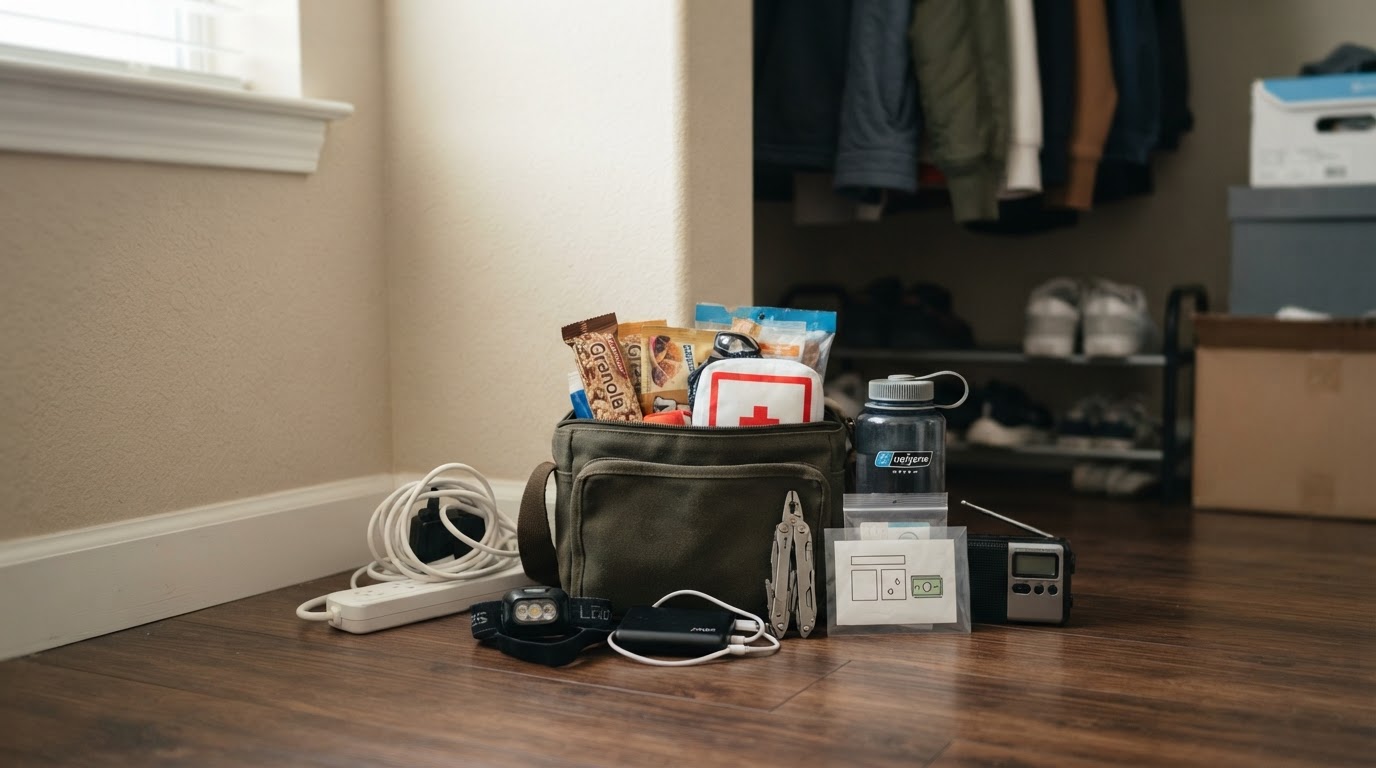
A dorm emergency kit that fits in a closet corner: surge strip, power bank, headlamp, documents, water, and snacks, plus the fire habits that matter most.
This article contains affiliate links. If you buy through these links, we may earn a small commission at no extra cost to you.
A dorm room is a bedroom, kitchen, office, and living room in about 130 square feet, under rules you did not write. The kit below respects that: everything fits in one closet corner, nothing violates a standard housing handbook, and the whole core costs under $100.
Start with fire, because in campus housing it is the most likely emergency by far. U.S. fire departments answer an average of about 3,200 structure fires a year in dormitories, fraternities, sororities, and similar housing, according to NFPA data for 2020 through 2024, and cooking equipment is involved in the large majority of them. The fix is mostly habits: never leave a microwave or shared-kitchen burner unattended, keep paper and towels away from heat, and know your two nearest stairwells before you need them. Candles and incense are banned in nearly all campus housing, so light is a gear problem, not a flame problem. Sleep with the room door closed: UL's Fire Safety Research Institute runs a "Close Before You Doze" campaign on exactly this, because a closed door slows heat and smoke from reaching you. And since fire drills happen at 2 a.m., keep shoes and the headlamp by the bed so a shivering hallway wait stays a non-event.
Power: strip, bank, and light
Dorm outlets are scarce and old buildings surge when power comes back after an outage. Bring a surge-protected strip rather than a plain extension cord, since housing handbooks commonly restrict unprotected cords, and one strip with a long cord usually covers a charger, a lamp, and a laptop from a single outlet.
→ Tripp Lite TLP808B Surge Protector
The strip runs about $29.69. When the outage itself arrives, a charged power bank keeps your phone alive long enough to reach family, check campus alerts, and find out whether the dining hall has power. The one below runs about $25.99 and can refill a typical phone roughly twice, depending on battery size.
→ Anker Power Bank 10,000mAh USB-C
For moving around a dark building, a headlamp beats a phone flashlight: it leaves both hands free for stairs, doors, and carrying things. Keep it in the same drawer every night so you are not searching in the dark. This one runs about $19.95.
→ Petzl Tikkina Headlamp (300 Lumens)
Papers, water, snacks, and meds
Dorms flood, burn, and get evacuated, and replacing documents from three states away is miserable. Keep your ID, passport, insurance card, and a copy of your housing agreement in one grabbable bag, and photograph all of it into cloud storage as backup. The bag below runs about $17.98 and adds heat and splash resistance around the originals. Our grab-and-go document binder guide has the full checklist if your parents want to build one with you.
→ DocSafe Fireproof Document Bag
FEMA's Ready campaign lists water, food, a flashlight, and first aid as the core of any basic kit, and the dorm version is small: a case of bottled water or a filled pitcher, a few granola or protein bars, and any daily medication with a three-day buffer. Refill the buffer before it runs out, not after. Add a small first aid kit for blisters, cuts, and headaches; our 4 best first aid kits roundup covers what belongs in one.
The habits that cost nothing
Agree with family on one out-of-area contact to check in with during a big disruption. Local calls jam while long-distance often goes through, which is why our family emergency communication plan centers on that one number. Save campus police, the RA duty line, and maintenance in your phone now.
Charge e-bikes, scooters, and spare lithium batteries on hard surfaces where you can see them, and do not leave them charging overnight. Campus fire-safety offices have started calling out battery fires as a growing cause alongside cooking, so treat a swollen or hot battery as a take-it-outside problem, not a wait-and-see one.
Finally, walk your fire exits once, in daylight, during your first week: both stairwells, the extinguisher cabinet nearest your room, and the rally point on the building placard. That ten-minute walk plus the four items above is the whole plan, and it fits in a closet corner.
The Bottom Line
Surge strip, power bank, headlamp, and document bag: about $94 together, one closet corner, no housing violations. Pair them with water, snacks, a medication buffer, and one family check-in contact, and skim our power outage survival guide for what the first dark evening actually feels like.
Frequently asked questions
What should a college student keep for emergencies in a dorm?
A surge-protected power strip, a charged power bank, a headlamp, copies of key documents, a few days of water and snacks, a small first aid kit, and any daily medication. It all fits in one corner of a closet.
Are candles allowed in dorms?
Almost never. Most campus housing bans open flames, including candles and incense, and many ban hot plates and space heaters too. Check your housing handbook before bringing anything that heats up, and use a flameless light instead.
How do I prepare for a campus power outage?
Keep your power bank charged, know where your headlamp is, and keep your phone topped up when storms are forecast. Agree with family in advance on one out-of-area contact to check in with, since local circuits jam.