
Dryer Fires Start in the Vent: Cleaning, Warning Signs, and What to Do
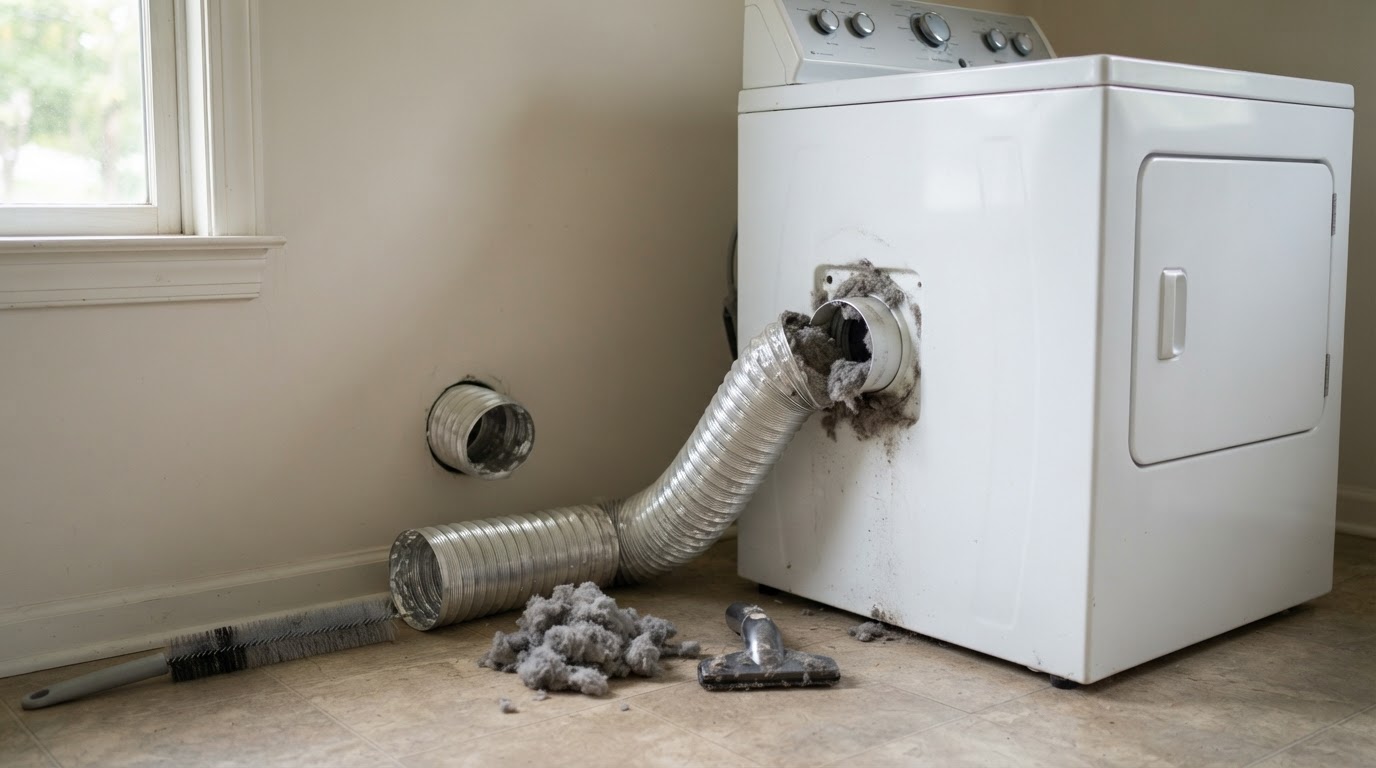
Dryers cause about 2,900 U.S. home fires a year, per the U.S. Fire Administration. The every-load lint habit, the yearly vent cleaning, and when to stop.
This article contains affiliate links. If you buy through these links, we may earn a small commission at no extra cost to you.
Dryers cause an estimated 2,900 home fires a year in the United States, with about 5 deaths, 100 injuries, and $35 million in property damage, according to the U.S. Fire Administration. The leading factor, also per the USFA, is failure to clean, at roughly a third of those fires. The fuel is lint, the heat is the heating element, and the airflow that should carry both out of the house is the vent most people never look at.
Quick answer: Clean the lint screen before or after every load. Have the whole exhaust duct cleaned about once a year, use rigid or flexible metal ducting instead of vinyl, and keep the outside cap clear. If loads take longer than they used to, the laundry room feels humid, or you smell something hot, stop using the dryer until the vent is checked. If fire starts, call 911 first and get everyone out.
The lint screen is half the job
The Consumer Product Safety Commission's dryer safety alert puts the lint screen first: clean it before or after drying each load. A loaded screen restricts airflow, and restricted airflow does two bad things at once. Clothes take longer to dry, so the element runs longer, and the hotter, slower air deposits more lint deeper in the duct. CPSC names longer-than-normal drying time as the tell that the screen or the duct is blocked.
A clean screen plus a never-cleaned duct is still a duct full of fuel, which is why CPSC treats them as two separate habits.
The yearly vent cleaning
Once a year, work the full path from the back of the dryer to the outside wall:
- Pull the dryer out and check the connector. The short duct behind the dryer should be rigid or flexible metal, not vinyl or thin foil. CPSC calls for metal ducting; vinyl sags, traps lint in the low spots, and melts early in a fire. If the connector is crushed flat against the wall, replace it with a short metal section that holds its shape.
- Brush the duct run. A vent brush kit on flexible rods plus a vacuum handles a short straight run. The Holikme 35 ft Dryer Vent Cleaner Kit (58-piece) (about $28) reaches 35 feet and includes vacuum attachments for the trap area. Feed from both ends when you can reach them. What comes out tells you the schedule: a cup of fluff means yearly is right, a trash bag means go shorter.
- Clear the outside cap. The louvered cap should swing freely and close when the dryer stops. Paint, lint mats, and wasp nests all freeze it shut, and a stuck cap pressurizes the whole run. While you are there, confirm the cap is not buried in mulch or snow.
- Look for long runs and bends. Every 90-degree elbow adds the resistance of several feet of straight duct. A vent that snakes through an attic or crawlspace collects lint at each bend and deserves a professional cleaning, not a brush kit.
Dryers that run many loads a week, households with pets whose hair loads the screen, and vents longer than about 25 feet with bends all move faster than the yearly default. Match the schedule to the lint you actually pull out.
Warning signs that mean stop
CPSC's blocked-duct tells are observable without tools:
- Loads need a second cycle when they used to finish in one.
- The outside of the dryer feels unusually hot.
- Clothes come out damper than normal, or very hot to the touch.
- The outside cap flap barely opens while the dryer runs.
- The laundry room turns humid, which means moist exhaust air is leaking from a joint instead of leaving the house.
- Any hot or burning smell near the dryer.
Any one of these is a reason to stop using the dryer until the screen, connector, duct, and cap are checked. A burning smell plus heat is a reason to unplug it (or cut the breaker for a hardwired unit) and treat the next load as suspect until a service tech clears it.
Never run it asleep or away
CPSC says to switch the dryer off when leaving home or going to bed. This costs nothing and removes the worst case: a fire with a 20-minute head start and nobody to smell it. The same logic covers the laundry room smoke alarm. Bedrooms and hallways get alarms by code in most places; the laundry room often has none. A photoelectric unit outside the laundry area, like the First Alert SM210 10-Year Battery Smoke Alarm (about $26) with its sealed 10-year battery, covers the room where the house's most-ignored heating appliance lives.
When a dryer fire starts
Fire-department guidance for an appliance fire is short, and the order matters:
- Call 911 first, before opening anything. Opening the dryer door feeds the fire oxygen.
- Get everyone out. Laundry rooms sit near bedrooms in many floor plans; do not trade exit time for appliance time.
- Use an extinguisher only on a small, contained fire with a clear exit behind you. A 1-A:10-B:C unit like the Kidde FA110G Home Fire Extinguisher (1-A:10-B:C) (about $20) belongs within reach of the laundry area, not buried behind detergent. The PASS technique and fight-or-leave rules are worth ten minutes today.
- Do not reopen the dryer to check whether it is out. Let the fire department confirm.
A fire blanket like the BOZZYS Emergency Fire Blanket (40 x 40) (about $11) earns its drawer space for a small flare when lint in the trap area smolders rather than flames, but a duct fire inside the wall is beyond any handheld response. That is a get-out-and-call-it-in fire.
Afterward, the dryer stays out of service until a technician clears it, the same way a chimney stays cold after a flue fire. Document damage with photos for the insurance claim, and expect the tech to find the blockage that started it. Then put the cleaning on a calendar, because the USFA's one-third figure says most of these fires were a maintenance appointment that never happened.
The home fire escape plan covers two ways out and a meeting spot outside, which is what the 2 a.m. version of this fire needs. Burns from touching an overheated dryer or vent cover are covered in our burn first aid guide.
Source notes: U.S. Fire Administration (FEMA) dryer fire estimates and failure-to-clean factor via the National Fire Incident Reporting System; Consumer Product Safety Commission dryer safety alert (CPSC Publication 5022); fire-department appliance-fire response guidance.
Frequently asked questions
How often should a dryer vent be cleaned?
Clean the lint screen before or after every load, per the Consumer Product Safety Commission, and have the full exhaust duct cleaned about once a year, sooner if drying times stretch out. Households that run many loads a week or vent through a long duct with bends reach that point faster.
Can I clean a dryer vent myself?
You can handle the lint screen, the short connector behind the dryer, and the outside cap with a brush kit and a vacuum. A long duct run through walls, attic, or crawlspace is a job for a vent-cleaning service, since a disconnected joint inside a wall dumps hot lint-laden air where you cannot see it.
Is it safe to leave the dryer running when I leave the house?
No. The Consumer Product Safety Commission says to switch the dryer off when you leave home or go to bed. A dryer fire that starts while nobody is around gets its head start for free; one that starts while you are awake gets a 911 call within a minute.